
Plane Spotting An Air Show
March 8, 2026
Photography High Speed Jets And Low Speed Prop Planes
I am lucky to live 5 minutes away from the Dayton International Airport, home to the Dayton Air Show. Every June or July, 70,000 people descend on Vandalia, Ohio at the intersection of Interstate 70 and Interstate 75. Also, every year, I tell myself I am not going to the show. Inevitably, I end up there. I can’t stop plane spotting an air show.
Three years ago, I had an opportunity to create unique high school senior photos after hours at the Air Show. One of the exec leaders at the air show, my contact, had a son starting a job as an aircraft mechanic at PSA Airlines. My contact happened to be the pilot liaison to all the acts appearing that year. After every guest and vendor had exited the airport grounds, we rode a golf cart to the flight line. Parked there was the U.S. Air Force Thunderbirds F-16 demonstration team. The pilots had left for the day, but the crew was still around putting the aircraft to bed. I had 30 minutes to photograph the student within feet of arguably the most famous aerial team today. We had an amazing time, and the crew offered to close or open the canopies as needed.
Non-Traditional Air Show Photos
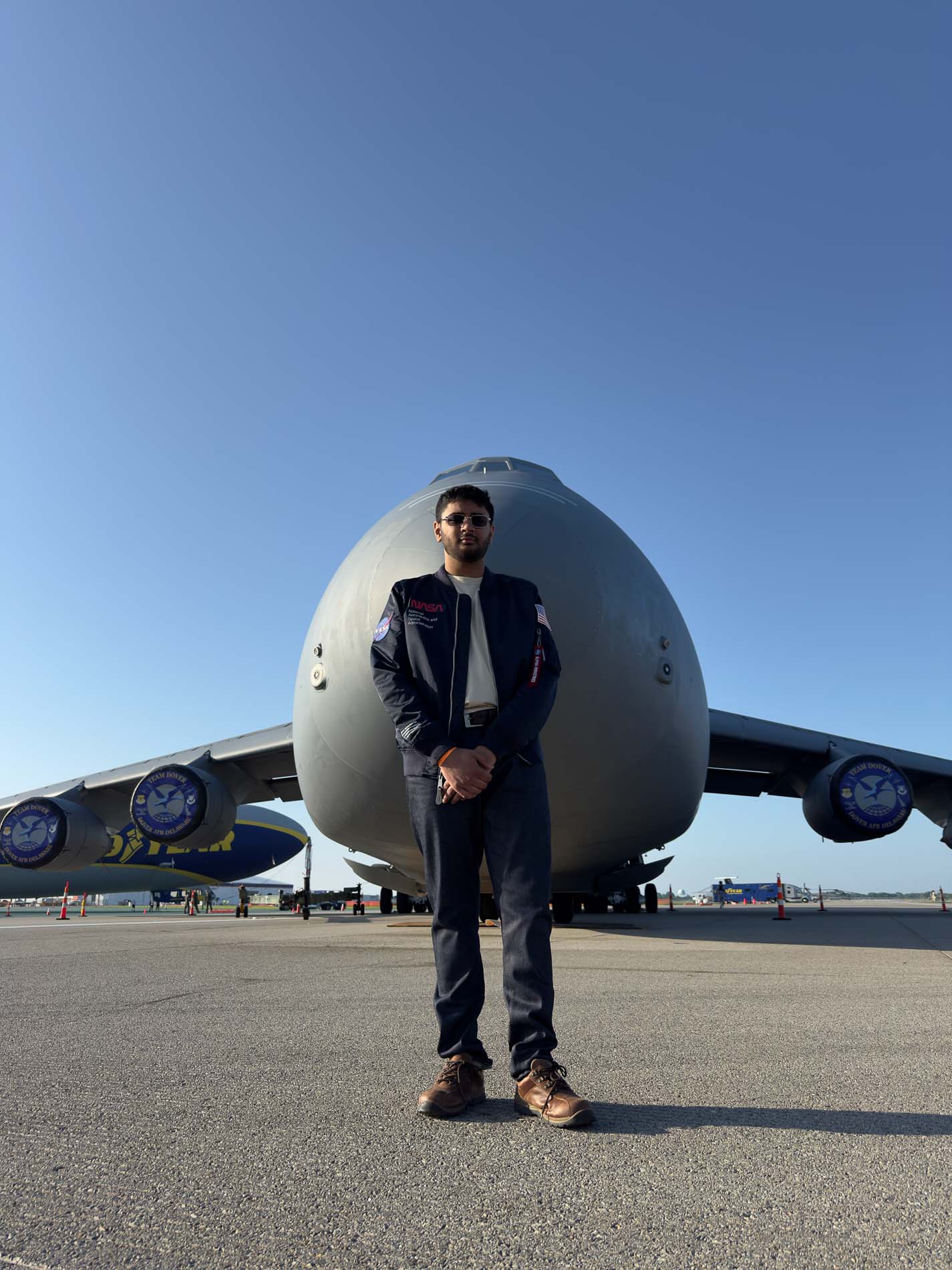
This year, I was hired to photograph another student, this time during the 7am-9am early entry. A limited number of passes can be purchased for Saturday or Sunday. I spent two hours photographing this student in front of dozens of static aircraft displays and on air stairs for a different look. So yet again, I went to the air shows when I had no intention of doing so.

Two years ago, I made myself photograph the U.S. Navy Blue Angels from the flight line of the air show. I spent the day in the photography tent, practicing my panning and zooming on the less intense aerial acts. I had three hours of practice before the headliners took to the sky. Photographing the slower moving aircraft required a long lens (Sigma EF Mount 150-600) and a lot of patience. Dialing in the ISO, Aperture, and Shutter Speed was easier because of the afternoon sun. I was limited to an aperture set by the lens at or above 5.6. For moving planes, this was fine. For jets, I kept the shutter speed between 1200 and 2000 to capture the sharpest image. (Future note to me here – next time I’ll slow it down to get some movement shots.) Due to these factors, I had a higher ISO.
Photographing Other Types Of Aircraft
Photographing moving prop planes during the show had me at shutter speeds between 160 and 250. I play around with it. For a good aviation photo of propeller planes, you want the props to be in motion. The more visible motion the better. This means you have to have a slow, precise panning movement to follow the plane. I try to photograph all moving aircraft from the moment I see them until they fully pass me. See any airplane from behind, the side, and the front tells a lot of the story.
I never use a tripod to get air show photos, although many people do. My body is stable enough to capture the shots I want. I find that tripods limit the speed at which I can whip the camera around to get the fast action. Do what works for you!
Always try to pay for special access before or after hours. Getting early access to the static displays when no one is there — wow! The sun is rising, it is quiet, and you have no spectators ruining your shots. (unless you want people in them.) This is a great time to get artistic and isolated shots of some amazing new and old aircraft.
Tip: If you want to tell the story of your air show day, try incorporating people into it. Get photos of people sitting under C-5 wings or people cheering as the Blue Angels fly by. It will really enhance your photo story. However, I never do this as my primary business, weddings, keeps me busy with people. I like to photograph only the planes.
Lastly, I love being a Dayton-based aviation photographer!